Gexa Energy
- 3.1
- Rating
- 100.00K
- Installs
- Free
- Price

 Analysis by App-foxy
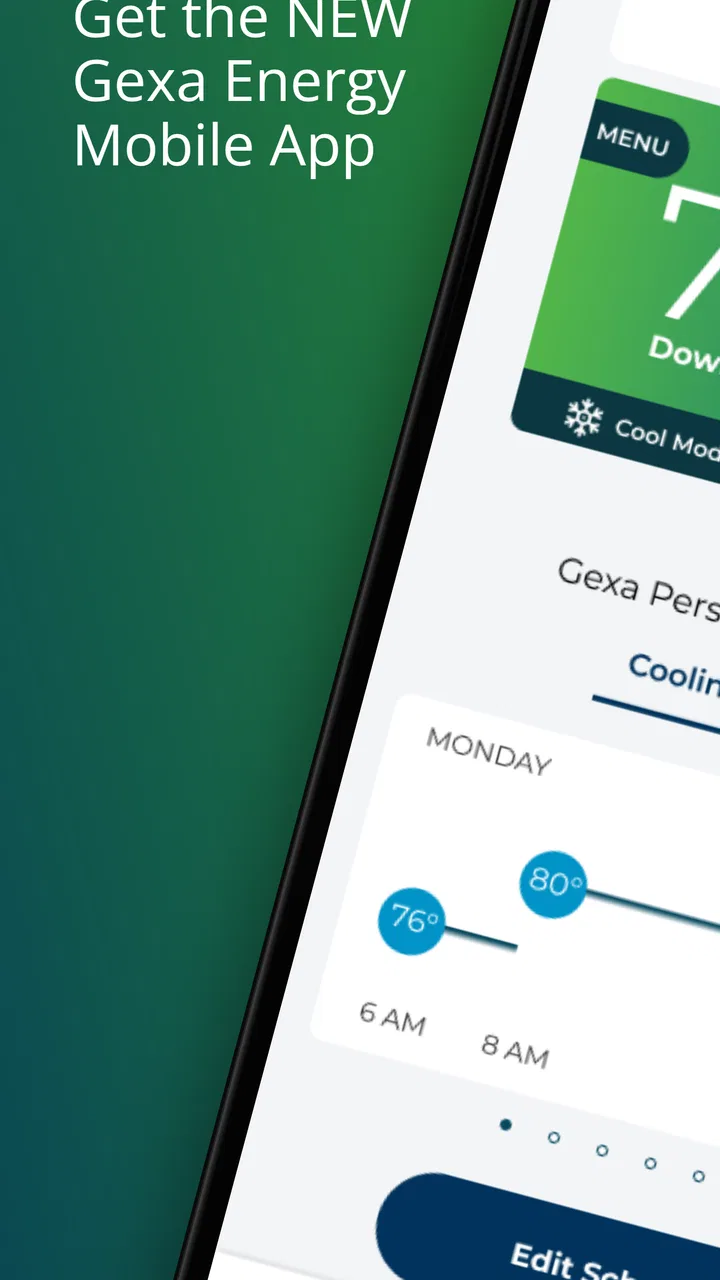
I found Gexa Energy most useful as a practical companion for people who already manage their household electricity through Gexa Energy and want that information close at hand. It is a free House & Home app from Gexa Energy LP, built around the everyday job of keeping an eye on home energy use rather than replacing a full smart-home system.
That distinction matters. This is not the kind of app I would install simply to control every appliance in a house, and I would not treat it as a universal energy monitor for any utility provider. Its value depends heavily on being a Gexa Energy customer. When that relationship is in place, the app gives energy management a more convenient place on my phone, which can make routine account checks less annoying.
How Gexa Energy fits into everyday home energy management
The app’s central purpose is managing and optimizing home energy usage. In practical terms, I see it as a bridge between the energy account and the decisions I make at home: checking what is happening, staying aware of consumption, and using that awareness to avoid treating the monthly bill as a surprise.
You May Also Like

 Blood Strike: 2.5 Anniversary
Blood Strike’s Loadouts Turn Every Drop Into a Tactical Gamble
A close look at Blood Strike’s custom loadouts: how fast access to signature weapons reshapes its battle royale rhythm, rewards preparation, and narrows the gap between fights.

 Pandora - Music & Podcasts
Pandora’s Music Is Easy to Start, but Harder to Recover
Pandora’s strength is its low-effort path from a seed to a station. Its weak spot is how much confidence it asks you to place in connection, setup, and quiet recovery.

 8 Ball Pool
 Is Built on Rivalries, Rematches, and Routine
A close look at the rivalries, rematches, shared routines, and unanswered safety questions that turn a quick pool match into a persistent mobile community.

 Samsung Music
’s Quiet Strength Is Playing What You Already Own
Its reach comes less from spectacle than from dependable access to a personal library. That simplicity is both the app’s strongest retention engine and its ceiling.

 AccuWeather: Weather Radar
AccuWeather Review: A Quick, Clear Forecast for Everyday Decisions
For everyday plans, the best forecast is the one you can understand quickly. AccuWeather makes rain timing, radar, and local conditions easy to act on, with a few trade-offs.

 Hill Climb Racing
Why Hill Climb Racing Still Turns Crashes Into One More Run
A tiny car, a bumpy hill and one more upgrade: Hill Climb Racing keeps resurfacing because its simple chaos makes every near-miss feel personal.
More From Our News Desk
View All News


That sounds simple, but simple can be useful here. Energy costs are often invisible while I am using a room, running appliances, or adjusting the temperature. A mobile app gives those decisions a more immediate context. Instead of waiting until the billing cycle feels abstract and distant, I can make checking energy information part of an ordinary phone routine.
My first recommendation would be to use it as a short recurring check rather than constantly watching it. A quick look after changing household habits can be more useful than repeatedly opening the app without a question in mind. For example, if I start using cooling more often, I can check the account and compare what I see with the change in routine. The app is most valuable when it helps me connect an action at home with the energy account.
It is also worth setting expectations before installing it. The store summary presents it as a tool for managing and optimizing home energy usage, not as a replacement for physical meters, appliance-level sensors, or a dedicated home automation platform. If I wanted detailed readings from individual devices, automated routines across different brands, or a broad dashboard for an entire smart home, I would look elsewhere. Gexa Energy serves a narrower and more understandable purpose.
What the free access means in practice
The app is free, and that is the clearest part of its value proposition. I do not have to make a separate purchase just to try the mobile account experience. For an existing customer, free access lowers the risk of testing it: I can see whether its energy information fits my routine without committing additional money to another subscription or device.
That does not mean the app itself removes the cost of electricity. The free download is a convenience layer around the energy service, not a promise of lower bills by itself. Any savings would come from the choices I make after paying attention to usage, not from installing the app alone. I think that is the fairest way to judge it.
The age rating is Everyone, which matches the ordinary household purpose of the app. It is designed for a broad audience rather than a specialist technical user. I would still expect the account holder or a member of the household with permission to handle the important account decisions, because energy information can affect real billing choices even when the interface itself is approachable.
On the Android side, the listed minimum operating system is Android 5.0, so the compatibility requirement is relatively modest. The current version is 3.0.11. That makes it accessible to people who are not using a recent phone, although the actual experience can still vary with a device’s age, screen size, and general performance.
Where the app can deliver value beyond a quick account glance
The most useful habit I can recommend is to treat the app as a record for household experiments. Rather than making several changes at once, I would alter one routine, such as reducing unnecessary cooling or shifting a high-use task, then return to the app later to see whether the account information supports the decision. This does not turn the app into a scientific measuring instrument, but it creates a more disciplined way to learn from household behavior.
A second useful workflow is checking before making a seasonal change. When I am about to rely more heavily on heating or cooling, the app can act as a reminder to review my energy position first. That small pause may encourage practical steps such as adjusting the thermostat, closing unused rooms, or avoiding overlapping appliance use. The app cannot perform those household actions for me, but it can help keep energy from becoming an afterthought.
A third insight is that the app may be more useful for shared household awareness than for one person’s private tracking. If several people live together, energy use is the result of many small choices. A central mobile view can give the household a common reference point, making it easier to discuss changes without relying only on memory or a bill that arrives after the behavior has already happened.
I also like the idea of using it before contacting support. If I notice something that seems unusual, reviewing the account information first can help me describe the issue more clearly. That will not solve every problem inside the app, but it can turn a vague concern into a specific question about usage or account activity.
The tradeoff between simplicity and detail
The same focused design that makes the app approachable may limit its usefulness for people who want deep analysis. A customer looking for appliance-by-appliance information, advanced charts, or a complete smart-home control center may find the experience too narrow. I would not choose this app as my main energy tool if detailed technical monitoring is the priority.
There is also a difference between seeing energy information and understanding why it changed. A mobile account view can show useful context, but the explanation may still require personal investigation. Weather, occupancy, insulation, appliance condition, and changes in routine can all affect household consumption. I would avoid assuming that every movement in the account has one obvious cause.
That is why I think the app works best alongside common sense rather than replacing it. If the information suggests higher usage, I would inspect the home routine before drawing a conclusion. I would also avoid making expensive equipment decisions based on one glance. The app can support a decision, but it should not be treated as the only evidence for a major purchase or repair.
Another tradeoff is provider dependence. Gexa Energy is the developer, so the app’s relevance is tied to that energy relationship. Someone served by another company may gain little from installing it. In that situation, the utility’s own app or a provider-neutral monitoring solution would make more sense, because the important account information would already be connected to the correct service.
Comparing it with the usual alternatives
The most obvious alternative is using a mobile browser or handling everything through paper bills and occasional account checks. Compared with those habits, a dedicated app can feel more immediate and easier to revisit. I prefer an app when I want a quick check without navigating a website every time, especially during a busy day.
Another alternative is a smart-home energy monitor. That type of product can be a better choice for someone who wants detailed technical insight, particularly when the goal is to identify which appliances or circuits are responsible for consumption. The tradeoff is that such tools may demand extra hardware, setup, and interpretation. Gexa Energy is the more sensible starting point when I mainly want the energy-provider side of the picture.
There are also budgeting apps and spreadsheets. They can help track household spending across many categories, but they are not a substitute for provider-connected energy information. I would use a budget tool to understand the wider household finances and Gexa Energy to stay closer to the electricity account. The two approaches solve different problems.
For a household already invested in a broad smart-home platform, this app may feel secondary. A single dashboard that combines lighting, thermostats, sensors, and usage can be more convenient for someone who wants automation. However, that broader setup can also hide the utility-account perspective. I see Gexa Energy as more focused: less ambitious than a smart-home hub, but potentially more relevant for checking the energy service itself.
Who is most likely to get real value
I would recommend trying it first to Gexa Energy customers who want a low-cost way to stay more aware of home energy use. It is especially suitable for people who prefer short mobile check-ins over keeping paper records or opening a browser. Renters and households without permission to install monitoring hardware may also appreciate a provider-based option that does not require building a separate technical system.
It can be helpful for a household preparing for a change in routine, such as spending more time at home or entering a season when heating or cooling becomes more important. In that situation, the app gives me a place to check the account while I adjust behavior. The benefit is not automatic savings; it is better awareness at the moment when awareness can influence choices.
I would be more cautious recommending it to someone who is not a Gexa Energy customer, who wants a provider-neutral tool, or who expects advanced device-level diagnostics. I would also skip it as a primary solution if the real goal is controlling smart appliances. A dedicated smart-home platform would be a better fit for that job, while a hardware energy monitor would be more appropriate for detailed measurement.
People who dislike checking utility information may not see much benefit either. The app cannot create useful awareness if I never open it or never act on what I see. Its strongest use case is a person willing to build a small habit around reviewing energy information and then making sensible household adjustments.
My experience-based way to use it
If I were introducing it to a friend, I would suggest starting with one clear question: “Has my household’s energy behavior changed recently?” I would open the app with that question in mind, review the available account information, and note the household routine around the same period. That is more productive than browsing without a purpose.
For a realistic example, imagine a home where someone begins working remotely and the air conditioning runs through more of the day. I would use the app as a prompt to review the energy situation, then test practical changes such as tightening the cooling schedule or avoiding unnecessary use in empty rooms. After giving the new routine time to settle, I would check again. The important insight is the workflow: observe, change one thing, wait, and review. That makes the app part of a decision process instead of a passive display.
I would also keep expectations realistic when several household variables change together. If guests arrive, the weather shifts, and appliance use increases at the same time, the app may show a different outcome without telling me which factor mattered most. In that case, I would use it as a signal to investigate, not as proof of a single cause.
For account questions, I would keep the app updated and make sure I am using the current version available for my device. The listed version is 3.0.11, and the app has been available since Jun 4, 2020. Those details suggest an established mobile product rather than a newly introduced experiment, but they do not guarantee that every phone will feel equally fast or that every customer will find the interface ideal.
What user feedback suggests about expectations
The app has an average rating of 3.2 from around 2.9 thousand ratings, with 428 written reviews. I read that as a sign to approach it with moderate expectations rather than assuming it will be perfect for every account or device. The rating is neither a strong endorsement nor a reason to dismiss it outright.
Its reach is also meaningful: it has over 100 thousand installs. That indicates that many people have chosen to try the mobile experience, but popularity alone does not answer whether it fits my needs. The important question remains whether I am a Gexa Energy customer and whether I want a focused account-and-energy tool rather than a broad monitoring platform.
When an app depends on a service account, individual satisfaction can vary for reasons beyond the interface. Account circumstances, household expectations, phone performance, and the amount of energy detail a person wants can all shape the experience. I would judge it by the usefulness of its routine checks, not by expecting it to solve every energy-management problem.
My verdict on downloading it
Because it is free, I see little financial downside for an eligible Gexa Energy customer who wants a more convenient way to stay engaged with home energy use. The value is practical rather than dramatic: the app can help me check information, notice changes, and build better habits around household consumption.
My recommendation is therefore conditional but positive. Download it if your energy account is with Gexa Energy and you want simple mobile access to energy management. Use it as a prompt for thoughtful household experiments, not as a promise of automatic savings or a replacement for specialist monitoring equipment.
I would skip it if I need a universal utility app, appliance-level measurement, or full smart-home automation. In those cases, the usual alternatives are more appropriate. For the right customer, though, this focused approach is sensible: it keeps the energy account close, costs nothing to try, and can turn an easy-to-ignore household issue into something I check and act on regularly.
FAQs for Gexa Energy
01What features does the Gexa Energy app offer?
The Gexa Energy app provides users with features such as bill payment, energy usage tracking, and detailed account management. Users can view their billing history, set up automatic payments, and receive notifications about their account status. Additionally, the app offers energy-saving tips to help reduce consumption.
02Is the Gexa Energy app available for both Android and iOS devices?
Yes, the Gexa Energy app is available for download on both Android and iOS platforms. Users can easily find it on the Google Play Store for Android devices and the Apple App Store for iOS devices, ensuring accessibility for a wide range of smartphones and tablets.
03How secure is my personal information on the Gexa Energy app?
The Gexa Energy app prioritizes the security of users' personal information by employing encryption and other security measures. It ensures that sensitive data, such as payment information and account details, are protected against unauthorized access, providing peace of mind for users managing their accounts.
04Can I track my energy usage in real-time with the Gexa Energy app?
Yes, the Gexa Energy app allows users to track their energy usage in real-time. This feature helps customers monitor their consumption patterns, identify peak usage times, and make informed decisions to optimize their energy use, potentially leading to cost savings on their bills.
05What should I do if I experience issues with the Gexa Energy app?
If you encounter any issues with the Gexa Energy app, you can contact their customer support team directly through the app or via their website. The support team is available to assist with technical problems, billing inquiries, and any other questions you may have about the app or your account.
Pros
- User-friendly interface simplifies navigation.
- Real-time energy usage tracking available.
- Customizable notifications for billing alerts.
- Easy online bill payment and management.
- Access to energy-saving tips and resources.
Cons
- Limited features for non-subscribers.
- Occasional app crashes reported by users.
- Requires stable internet for optimal use.
- No offline access to account information.
- Customer service response time can vary.

Gexa Energy
Gallery